Main problem
Audit planning is spread across too many files
Audit plans, invitations, documents and dates are often maintained in spreadsheets, emails and folders. A central view of open and completed audits is missing.

Audit management
Plan internal and external audits, document findings directly in the system and track resulting actions through successful completion.
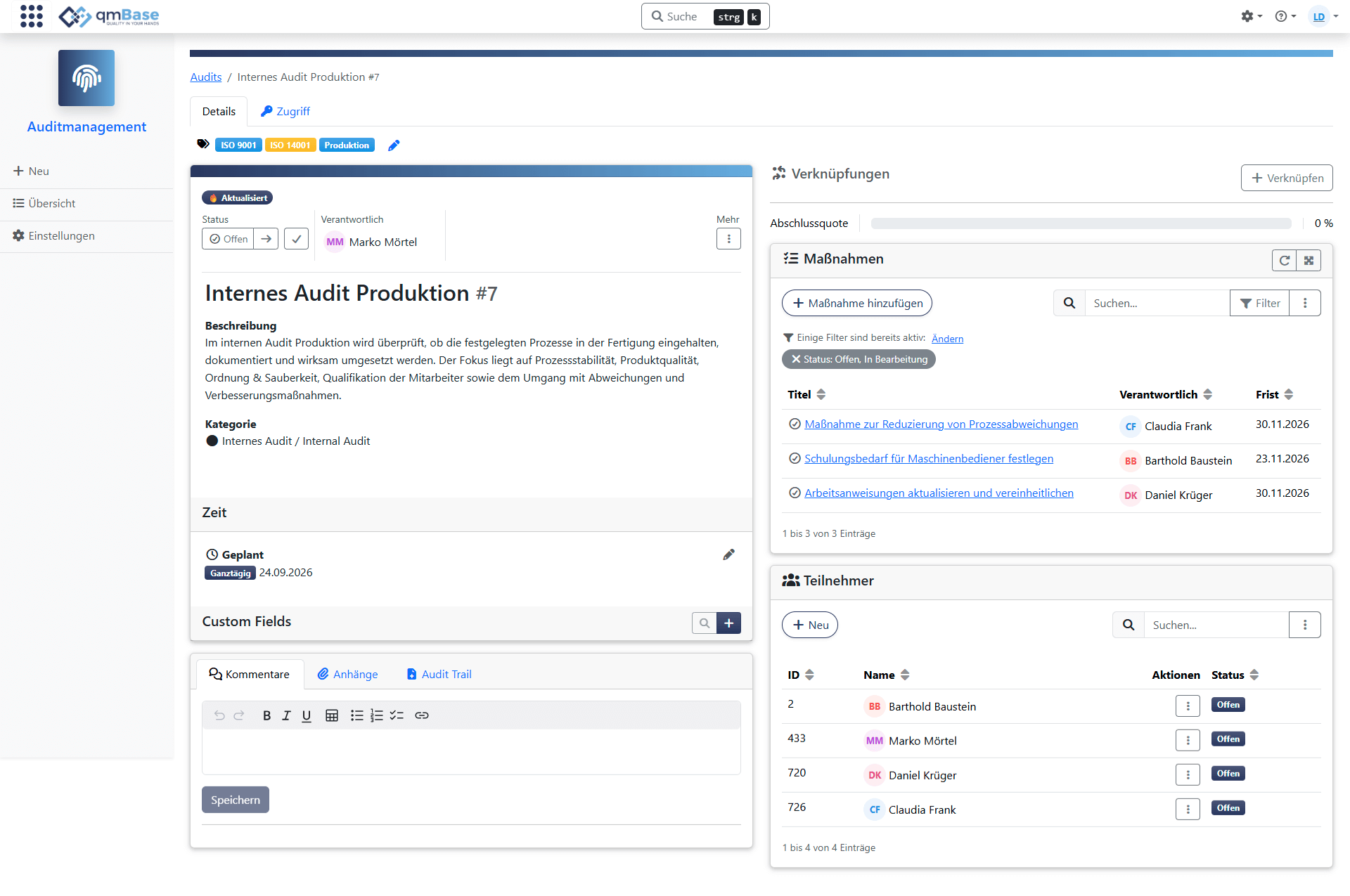
Why audits create follow-up work
Many audits are prepared well from a technical perspective, but lose impact after execution. What matters is whether findings are documented traceably and implemented consistently.
Main problem
Audit plans, invitations, documents and dates are often maintained in spreadsheets, emails and folders. A central view of open and completed audits is missing.
Nonconformities are documented during the audit, while actions are managed separately later. Over time, it becomes unclear why something was decided and which insight led to it.
An audit only creates improvement when responsibilities, deadlines and implementation status stay visible after the appointment.
Audit management with structure
Audit planning, findings, actions and evidence remain permanently connected. This keeps decisions, responsibilities and open points traceable.
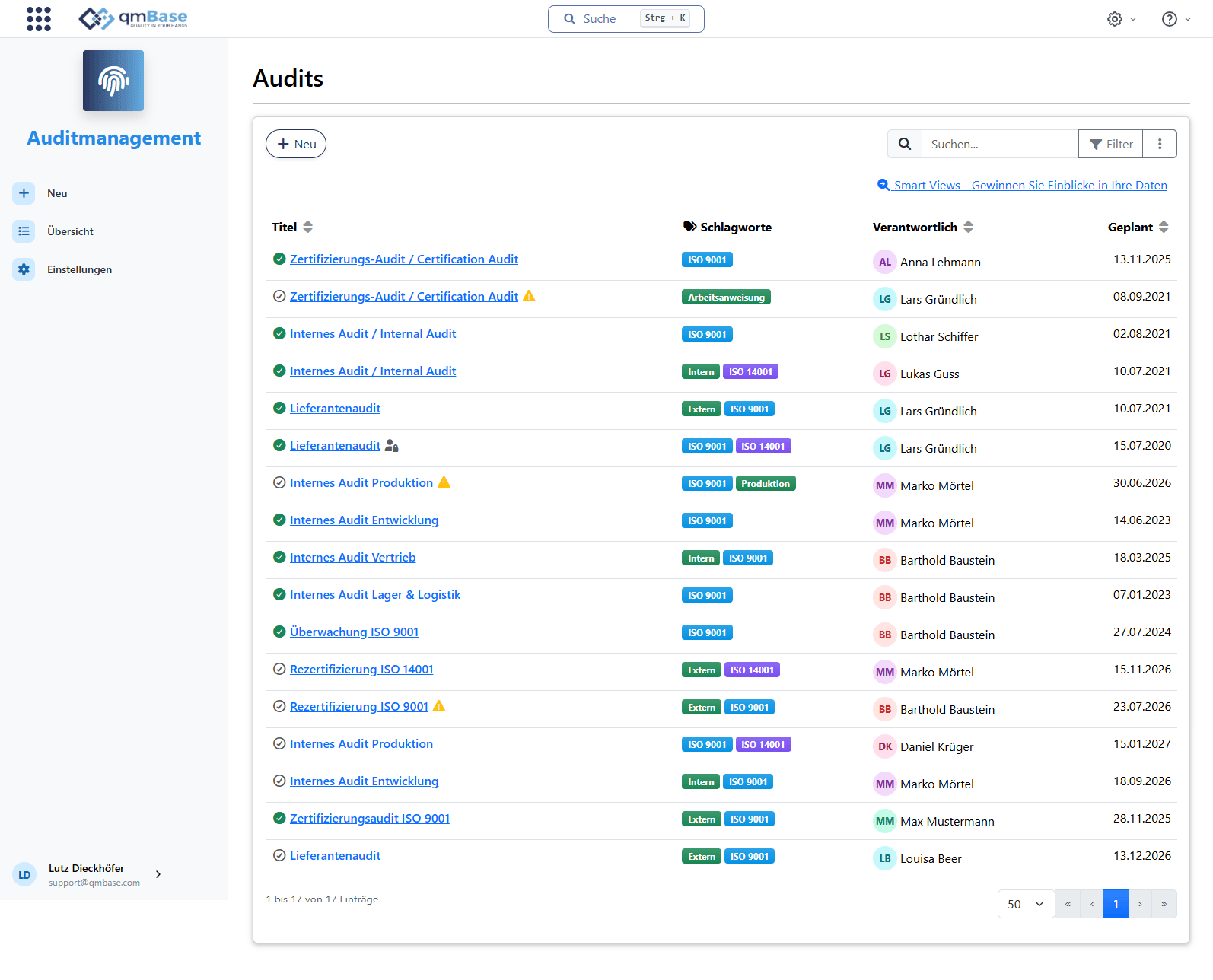
Plan
Organize audits centrally
Internal and external audits with date, scope, owners and participants
Involve
Manage participants and documents
Audit documents, attachments and stakeholders directly on the audit
Document
Capture audit findings directly
Nonconformities, observations and improvement potential remain traceable
Track
Connect follow-up actions
Responsibilities, deadlines and status emerge from the audit context
Report
Create audit reports faster
Existing information does not need to be documented twice
Prove
Keep audit activity traceable
Comments, attachments, custom fields and audit trail preserve the history
Connections instead of isolated work
In qmBase, an audit does not sit apart from daily work. Audit findings, actions, risks, documents, objectives and participants remain directly connected.
Audit findings do not remain stuck in the report. You can connect them directly with actions, owners and deadlines.
Documents, comments, audit findings and follow-up activities can later be found in one central place.
Audit
More confidence in external audits
“The audit went very well. The auditor was very positively impressed, understood the system quickly and praised it enthusiastically in many places.”
Jens Michael Bohn
Managing Director·H. H. Rotert GmbH & Co. KG
Audit execution
Create the audit, complete the right audit checklists and derive actions directly from the results. The process remains traceable without transferring findings into separate lists later.
Auditors work through the relevant questions directly in the audit. Answers, notes and evidence remain in the audit context.
When an audit finding requires action, it becomes an owned follow-up action with deadline and status.
Audit execution
From audit to improvement
Auditor
M. Schneider
Area
Production
Date
Jun 3
Status
12 / 16 questions answered
Result
2 observations documented
Owner
M. Schneider
Deadline
Jun 30
Effectiveness
open
Reports without duplicate documentation
Because audit planning, findings, actions and evidence are already connected, relevant information can be carried into the audit report automatically. Documentation emerges from the actual workflow.
Audit planning, findings, actions and evidence are documented during the workflow. The audit report reuses this information directly.
The final audit report is stored directly in document management and remains available for management reviews, external audits and evidence requests.
Audit report
Production area - ISO 9001
Update inspection plan
M. Schneider
Jun 30
Request missing evidence
L. Gray
Jul 12
Audit evaluation
The audit shows generally stable process control. Open actions mainly concern the currency of individual evidence and consistent documentation in daily work.
See how simple audit planning, execution and follow-up can be with qmBase.