
Sometimes a simple action is not enough.
Not for the requirements of your management system. And not to eliminate a problem permanently.
Then you need more: root cause analysis, traceable actions, evidence and an effectiveness check. That is exactly what CAPA management is about.
What Does CAPA Mean?
CAPA stands for Corrective and Preventive Action. The focus is not the individual action, but a traceable improvement process from the deviation through root cause analysis and implementation to the effectiveness check.
It is important to distinguish between three terms: correction, corrective action and preventive action.
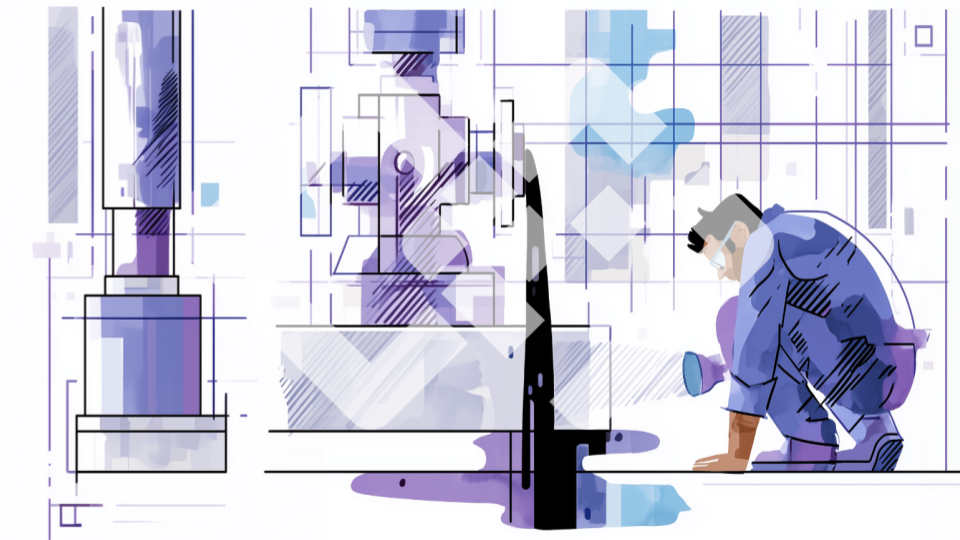
We will use the following example: oil leaks from a machine in production and runs onto the floor.
Correction
The purpose of a correction is to eliminate an acute problem, or nonconformity.
Correction: Wipe up the oil that has dripped onto the floor.
Corrective Action
A corrective action eliminates the cause of a problem and is intended to prevent the problem from recurring.
Corrective action: Investigate why oil is leaking, for example because of a worn seal. Replace the defective seal so this machine no longer leaks.
This eliminates the cause of the specific problem and prevents it from recurring.
Preventive Action
A preventive action is proactive and starts at a point where no failure has occurred yet.
Preventive action: For identical machines, a preventive seal replacement after 1,000 operating hours is introduced based on wear data - before a leak occurs there.
CAPA is not used identically in every normative or regulatory environment. ISO 9001:2015, for example, no longer contains a separate classic section for “preventive action”. The preventive idea has been integrated into the risk-based thinking of the entire quality management system.
The basic principle, however, is always similar: Do not just correct problems, but understand causes and systematically prevent future deviations.
- Correction: Eliminate an error that has occurred.
- Corrective Action: Eliminate the cause so it does not recur.
- Preventive Action: Address an identified risk before the error occurs at all.
What Is CAPA Management?
CAPA management turns individual corrective and preventive actions into a traceable improvement process. Triggers, root cause analysis, actions, responsibilities, evidence and effectiveness checks are considered in context.
Complaint -> root cause analysis -> action -> implementation -> evidence -> effectiveness check
The decisive point is not to create as many CAPAs as possible. A good CAPA process ensures that relevant problems are systematically investigated, their causes are addressed and the actions taken are checked for effectiveness. This is exactly what distinguishes CAPA management from a simple action list.
How Is a CAPA Different From a Normal Action?
A CAPA contains actions. But a single action does not yet represent a CAPA process.
Staying with the leaking machine: oil leaks because a seal is worn. A regular action could be: Replace the defective seal. Responsibility, deadline and status can be defined for this.
With a CAPA, however, the context also matters:
- Which deviation triggered the action?
- Is this an isolated case or a recurring problem?
- Which cause was identified?
- Why was this action chosen?
- Which documents or processes were updated?
- What evidence exists for implementation?
- How will effectiveness be evaluated later?
The difference is therefore less about the individual task and more about the traceability of the entire context. An action can be viewed in isolation. A CAPA should not.
Why Is a Simple Action Sometimes Not Enough?
Not every task requires a root cause analysis or a formal effectiveness check.
If a meeting decides to equip a new conference room, a normal action is enough. It is different when a deviation occurs repeatedly, can have greater impact or is relevant from a regulatory perspective. Then it is not enough to define only what should be done.
Take the leaking machine again: replacing the defective seal first resolves the problem. But we still do not know:
- why the seal is worn,
- whether other machines could be affected,
- whether the chosen action actually eliminates the cause, and
- whether the problem remains absent afterwards.
This is exactly why CAPA expands the individual action with root cause analysis, documented decisions and effectiveness checks.
Depending on the quality management system, normative or regulatory requirements may also apply. A CAPA process is therefore not an end in itself. It is useful or required where a simple action does not provide enough certainty and traceability.
When Does a CAPA Process Make Sense?
Not every deviation should automatically trigger a CAPA. The decisive question is whether a simple correction is sufficient or whether the problem should be systematically investigated and its effectiveness tracked.
A CAPA is especially appropriate when there is:
- high criticality or significant possible impact,
- repeated occurrence of the same or similar deviations,
- evidence of a systemic cause,
- relevant quality or process risks,
- normative or regulatory requirements, or
- missing effectiveness of actions already implemented.
If oil leaks once from a machine because of an obviously damaged seal, a correction may be enough. But if similar leaks occur repeatedly, several machines are affected or relevant risks arise, this points to systematic root cause analysis and a CAPA process.
Good CAPA management therefore does not mean as much documentation as possible. It means choosing the right scope of handling for the specific problem.
How Does a CAPA Process Work?
The specific CAPA process depends on the industry and regulatory requirements. Typically, it can be structured into seven steps:

1. Record the trigger
The deviation and its effects are documented in a traceable way.
Example: Oil leaks from a production machine.
2. Evaluate the problem
Criticality, impact and recurrence risk determine the required scope of handling.
Example: Because several identical machines are used, the problem is investigated systematically.
3. Analyze the cause
The organization investigates why the problem occurred, for example using 5 Why or a process analysis.
Example: The seal wears earlier than assumed in the previous maintenance interval.
4. Define actions
Concrete actions with responsibilities and deadlines are derived from the cause.
Example: Replace the seal, check identical machines and adjust the maintenance interval.
5. Implement actions
The planned actions are carried out and their implementation is documented.
Example: The machines are checked and maintenance planning is updated.
6. Check effectiveness
After implementation, it is evaluated whether the actions have actually solved the problem permanently.
Example: After a defined period, it is checked whether leaks have occurred again.
7. Close the CAPA
Once the actions have been implemented and their effectiveness has been confirmed, the CAPA is closed in a traceable way.
Which CAPA Requirements Come From Quality Management and Regulation?
How formal a CAPA process needs to be depends on the respective quality management system and regulatory environment. There is no universal CAPA standard.
ISO 9001
ISO 9001 requires a systematic approach to nonconformities and corrective actions. Causes should be addressed and the effectiveness of actions taken should be reviewed.
Since ISO 9001:2015, there is no longer a separate classic “preventive action” section. The preventive idea is reflected in risk-based thinking in particular.
ISO 13485 and FDA QMSR
In the medical device sector, CAPA is much more formalized. ISO 13485 defines concrete requirements for corrective and preventive actions. For the US market, the FDA Quality Management System Regulation (QMSR) has applied since February 2026 and integrates ISO 13485:2016 into the regulatory framework.
Pharma and GMP
CAPA is also a central element in pharmaceutical quality management. ICH Q10 connects corrective and preventive actions with risk management and continual improvement across the product life cycle.
IATF 16949
Structured problem-solving processes are also firmly established in the automotive sector. Root cause analysis, systematic actions and evidence of effectiveness are decisive.
The basic principle is similar in all cases: a completed action alone does not prove that a problem has been understood and solved sustainably.
Why CAPA Management Becomes Difficult in Practice
Most companies do not have too little information. They have information in too many places.
The complaint is in the complaint system. The root cause analysis is in a document. Actions are tracked in Excel. The revised work instruction is in document management. The effectiveness check may be in an email.
Each piece of information may be fully documented on its own. Nevertheless, a problem arises:
The context gets lost.
A few months later, the search begins: Which complaint triggered this action? Which cause was identified? What was changed as a result? And was the action checked for effectiveness at all?
This is one of the biggest challenges in CAPA management:
The challenge is not the individual action. It is keeping the entire context permanently traceable.

What Should CAPA Software Be Able to Do?
Good CAPA software should not offer as many functions as possible. What matters is that triggers, causes, actions, evidence and effectiveness remain traceably connected.
Map relationships
CAPAs should be directly linked with complaints, audits, risks, processes, documents and other actions. This keeps visible why a CAPA was created and what follows from it.
Manage responsibilities and deadlines
Responsible persons and due dates should be clearly defined for actions and checks. Reminders help ensure that open tasks are not forgotten.
Document causes and evidence
Root cause analyses, work instructions, inspection reports, training records and other relevant information should be assigned directly to the CAPA.
Keep changes traceable
A complete history makes it visible what was added, changed or decided during the CAPA process.
Check effectiveness
The process does not end with a completed action. The software should also show whether, and based on which criteria, the desired improvement has actually been achieved.
This keeps triggers, causes, actions and effectiveness connected as one traceable improvement process.
Does CAPA Need Its Own Software Module?
Not necessarily. A separate CAPA module can make sense if a company needs a highly specialized and firmly defined process.
However, CAPAs rarely arise in isolation. They often originate from complaints, audits, deviations or risks and lead to actions, document changes or training. A separate module can therefore also create a new information silo.
In qmBase, CAPAs are represented directly in existing action management and expanded with the required context. This allows you to:
- mark and filter CAPAs using tags,
- add additional CAPA-specific information through custom fields, and
- link complaints, audits, risks, documents and other actions directly with one another.
This does not create a separate action world only for CAPAs. Instead, the CAPA process fits into the existing quality management system.
Learn more about action management with qmBase
Frequently Asked Questions About CAPA
What does CAPA mean?
CAPA stands for Corrective and Preventive Action. It means a structured approach to existing and potential problems, in which causes are investigated, actions are implemented and their effectiveness is evaluated.
What is the difference between correction and corrective action?
A correction eliminates the identified nonconformity. A corrective action addresses its cause and is intended to prevent it from recurring.
What is the difference between CAPA and a normal action?
A CAPA typically contains more context than an isolated action. Depending on the process, this may include the trigger, root cause analysis, evaluation, evidence and effectiveness check in addition to the actual actions.
Does every deviation need to trigger a CAPA?
No. The necessary scope of handling should fit criticality, risk, frequency and applicable requirements, among other factors. For minor isolated cases, a simple correction may be sufficient.
What belongs to a CAPA?
Typically, a CAPA includes trigger and evaluation, root cause analysis, actions, responsibilities and deadlines, evidence and an effectiveness check. The specific scope depends on the regulatory environment.
Do you need dedicated CAPA software?
Not necessarily. What matters is that triggers, causes, actions, evidence and effectiveness checks can be documented in a structured way and connected with one another. Depending on requirements, a separate CAPA module or a flexible action management system may be useful.
Conclusion: CAPA Is About Context
A completed action does not yet mean that a problem has been solved sustainably.
CAPA management connects trigger, cause, actions, evidence and effectiveness checks into a traceable improvement process. In the end, what matters is not that an action has been marked as completed. What matters is that the underlying problem has been handled traceably and solved effectively.
If you want to see how CAPAs can fit into your quality management without a separate CAPA silo: